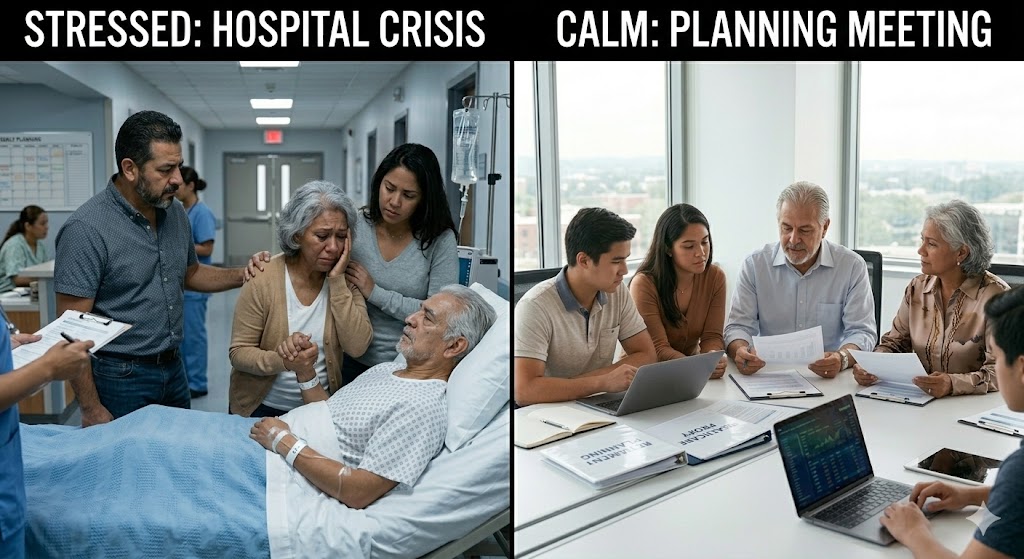
The True Cost of Waiting to Plan for Aging Parents
"We'll Figure It Out When We Need To." — Why That Phrase Costs Families Thousands
Most families say they'll deal with aging parent care when the time comes. After 20 years of working with families in crisis, I can tell you: the cost of waiting is almost always far higher than the cost of planning.
"We'll figure it out when we need to."
This is what most families say about aging parent care. It seems prudent — why borrow trouble? Why plan for things that might not happen?
But after 20 years of working with families, I can tell you: the cost of waiting is almost always higher than the cost of planning. And I don't just mean financially. Let me show you what waiting actually costs.
The Financial Costs of Reactive Caregiving
Crisis Placement vs. Planned Placement
When families need to find care urgently — after a fall, a hospitalization, a sudden decline — they take whatever is available. In my experience, crisis placements cost 15–25% more than planned placements for equivalent care.
Why? Good facilities have waitlists, so crisis families get waitlist-free options that are often lower quality. There's no time to compare pricing, negotiate, optimize for preferences, or plan the move itself.
Real example: I recently worked with a family who paid $8,000/month for memory care found during a crisis. Six months later, we moved their mother to a superior facility for $6,200/month — a facility that had a 3-month waitlist they couldn't wait for initially. That's $21,600 in excess costs over six months, plus the disruption and emotional toll of moving twice.
Emergency Medical Costs
Reactive care means more emergency room visits, more hospitalizations, and more complications from delayed intervention. Studies show that proactive care management reduces hospitalization rates by 20–40% for complex elderly patients. At average hospitalization costs of $15,000+, the savings are substantial.
Legal Costs
Families without proper documents in place may need emergency guardianship proceedings. In Georgia, that's $3,000–$8,000 in legal fees — for documents that could have been completed proactively for under $1,500. I've seen families spend $10,000+ on emergency legal proceedings that simple advance planning would have prevented entirely.
Caregiver Productivity Costs
Crisis caregiving demands immediate attention. Proactive caregiving can be scheduled. One study found that family caregivers lose an average of $522,000 in lifetime earnings due to caregiving — primarily from reduced work hours, missed promotions, and workforce exit. Proactive planning can substantially reduce this impact by allowing caregivers to manage responsibilities more efficiently and seek help before burnout sets in.
15–25% More expensive — average cost increase for crisis vs. planned facility placement
$522,000 Average lifetime earnings lost by family caregivers (AARP)
The Relationship Costs
Family Conflict
Sibling conflict is highest when decisions must be made urgently, information is incomplete and unshared, roles are undefined, and emotions are running hot. All of these conditions characterize crisis caregiving. Proactive planning reduces each one.
I've seen families shattered by eldercare conflict — siblings who don't speak for years, or ever again. That relationship damage is incalculable.
Marriage and Partnership Strain
Caregiving stress affects marriages. Caregiving crisis can devastate them. Divorce rates among caregivers are elevated. Even relationships that survive often carry lasting scars: resentment about support not provided, intimacy sacrificed to caregiving demands, and financial stress from crisis spending.
The Emotional Costs
The Conversations That Didn't Happen
These conversations are possible in calm moments. They are nearly impossible in crisis.
"What do you want if you can't speak for yourself?"
"What matters most to you about how you live?"
"What would you never want?"
Families who wait often lose the opportunity to know their parent's true wishes. They make decisions in uncertainty that could have been made with confidence and clarity. The guilt of not knowing what Mom would have wanted haunts families for years.
The Options That Disappeared
Time creates options. Crisis eliminates them. Good facilities have waitlists. Medicaid planning requires years of advance work. Home modifications done proactively cost less and allow aging in place longer. Relationships built with providers before crisis are more effective during crisis. Every week of waiting narrows what's available to you.
The Quality of the Entire Experience
There's a less quantifiable but very real cost: the quality of the lived experience itself.
❌ Reactive Families Describe:
Chaotic
Terrifying
Guilt-ridden
Lonely
Devastating
✅ Proactive Families Describe:
Difficult but manageable
Meaningful
Connected
Prepared
Even sometimes beautiful
Same circumstances. Different experience. Based entirely on preparation.
Calculating the True Cost
A Rough Comparison
Excess care costs (reactive)$20,000 – $50,000
Caregiver productivity loss$50,000 – $100,000+
Emergency legal fees$3,000 – $10,000+
Relationship & emotional costsIncalculable
Cost of proactive planning & support$5,000 – $15,000
The return on investment Not even close.
Why Families Still Wait
If the math is so clear, why do most families approach caregiving reactively? Three reasons come up again and again.
Optimism Bias
"It won't happen to us" or "It won't happen yet." But it will. If your parent is over 70, the probability of needing care support within 5 years is substantial — and the longer you wait, the fewer options you'll have.
Avoidance
The conversations are uncomfortable. The planning feels morbid. It's easier not to think about it. But avoidance doesn't prevent the situation — it just ensures you'll face it completely unprepared.
Perceived Cost
Proactive support looks like an expense when nothing is "wrong." But it's actually insurance against much larger costs. The question isn't whether you can afford to plan — it's whether you can afford not to.
The best time to plan was five years ago. The second best time is now.
This Is Your Moment to Act
If you've read this far, you're thinking about your own situation. Maybe your parents are healthy but aging. Maybe there are early signs of decline. Maybe you're already in early caregiving and sensing that things could get more complex.
Whatever your situation, this is the moment to act — not because crisis is imminent, but because planning now preserves options that crisis eliminates.
Find Out Where You Stand — In 3 Minutes
The free Care Clarity Quiz helps you understand where you currently are in your caregiving journey and what your most important next steps are. Personalized insights based on your specific situation.
And if you're ready to move from thinking about planning to actually planning, I offer consultations for families in the Atlanta area.
Take the Free Care Clarity Quiz →Schedule a Consultation
Frequently Asked Questions
Q: What is the cost of not planning for elderly parents?
The cost of not planning includes financial impacts — crisis placements costing 15–25% more, emergency medical costs, and legal fees for guardianship proceedings — as well as relationship costs like family conflict and marriage strain, and emotional costs including guilt from not knowing a parent's wishes and losing options that advance planning would have preserved. Total excess costs can reach $50,000–$150,000 or more.
Q: When should I start planning for my aging parents' care?
Start planning when parents are healthy and conversations can happen calmly — typically when parents reach their 70s, or earlier if health conditions exist. Key planning elements include legal documents, understanding your parent's preferences, researching care options, and having family conversations about roles and responsibilities before a crisis forces the issue.
Q: What happens if you don't plan for elderly care?
Without planning, families face making major decisions under crisis pressure, accepting whatever care options are immediately available (often more expensive and lower quality), family conflict from undefined roles and urgent decisions, legal complications without proper documents, and missing the opportunity to know and honor a parent's true wishes.
Q: Is it too late to plan for aging parents?
It's rarely too late to improve your situation, though earlier planning always preserves more options. Even mid-crisis, getting clarity and building a plan prevents future reactive cycles. Start where you are: assess the current situation, identify immediate priorities, and build systems for better navigation going forward.
About the Author: Melanie Parks is a Board-Certified Patient Advocate specializing in proactive care planning for aging parents. She serves families in the Atlanta metro area through Lend A Helping Hand Healthcare Advocates — helping families plan before crisis strikes, so they can navigate with clarity instead of chaos.
